
When It’s Good to Ride In the Blackstone Valley…and When It’s Not
Not all snow is good for fat biking.
In Massachusetts — especially in the Blackstone Valley — winter fat biking conditions depend on structure, temperature, and base support. Snow depth alone doesn’t decide it.
Our neighbors to the north have been clear about this for years. The Vermont Mountain Bike Association and Carrabassett Valley NEMBA both publish winter riding guidelines built around one simple standard:
Ride only when the surface supports your weight without rutting.
That’s the benchmark.
Here’s how to tell when that’s true.
How Much Snow Do You Need for Fat Biking?
People often ask how many inches of snow are required.
There isn’t a single number.
What matters more:
- Is the ground frozen beneath the snow?
- Has the snow bonded after grooming or a freeze cycle?
- Is the temperature stable below freezing?
Early-season snow over unfrozen dirt often looks rideable but fails under load. Mid-season snow over a frozen base is far more stable — even if the total depth is lower.
In Massachusetts, frequent freeze–thaw cycles make base strength more important than raw snowfall totals.
Fat Bike Tire Pressure for Snow Conditions
Tire pressure affects flotation and traction.
Typical winter fat bike PSI ranges:
- 4–6 PSI for firm, groomed snow
- 2–4 PSI for packed but softer conditions
- 1.5–2 PSI (sometimes lower) for very soft, unpacked snow
Lower pressure increases the tire footprint. That spreads your weight and reduces penetration.
But lowering PSI does not strengthen weak snow.
If reducing pressure doesn’t reduce rut depth, the snowpack isn’t ready.
Rider weight also matters. Snow responds to load. A heavier rider will cause more deformation under identical conditions.
Groomed Fat Bike Trail Conditions
Freshly groomed snow is not automatically ready to ride.
Grooming breaks apart snow crystals. The surface needs time in cold air to bond again. That bonding process is what restores strength.
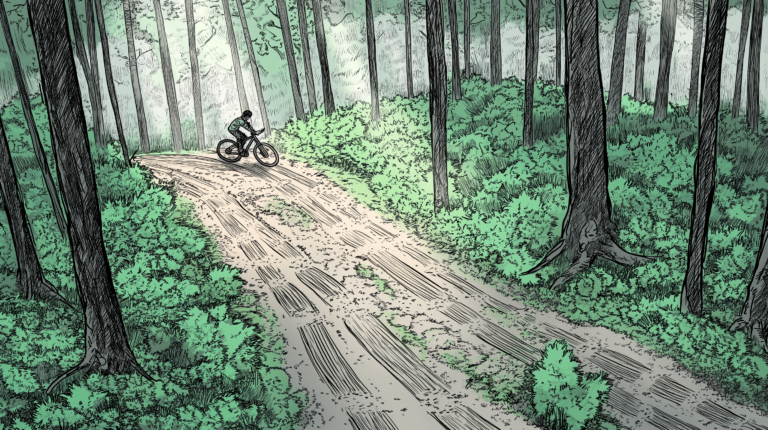
Ride too soon and shallow grooves freeze overnight into hard ruts.
Both VMBA and Carrabassett emphasize patience after grooming because once ruts set, they persist.
Cold, stable temperatures help groomed trails firm up. Sun and rising temperatures weaken them.
How to Tell If Fat Bike Snow Conditions Are Good
Use a simple field test.
Ride 20–30 yards. Stop. Turn around.
Good winter fat biking conditions show:
- A shallow tread imprint
- No pushed-up sidewalls
- No visible displacement
Poor conditions show:
- Defined ruts
- Snow pushed to either side
- Rear-wheel trenching on climbs
You may hear about the “one-inch rule.” That’s a rough guide, not a law. Depth matters less than displacement.
On groomed trails, even shallow rutting can harden into long-term damage.
Why Temperature Changes Conditions So Quickly
In Massachusetts winters, conditions can shift within hours.
Morning cold strengthens snow structure.
Afternoon sun weakens it.
As temperatures approach 32°F, bonding between snow grains decreases. The surface becomes more prone to shearing under load.
Once the surface begins to fail, it rarely improves until another freeze cycle.
If temperatures are rising toward freezing, conditions are likely declining.
Let the Climb Decide
Flat sections can hide weak snow.
Climbs expose it.
If steady seated pressure moves you forward cleanly, the base is holding.
If the rear wheel digs a trench, the snowpack is failing.
Repeated spin causes lasting damage.
Snow Is Not Mud
Snow can recover with a freeze. Mud cannot.
If you see exposed dirt or feel soil shifting under your tires, stop riding. Wider tires spread damage farther.
Avoiding wet trail damage protects long-term access across Massachusetts trail systems.
Frequently Asked Questions About Winter Fat Biking
Is it okay to fat bike right after a snowstorm?
Only if the base is frozen and the snow has bonded. Fresh, soft snow over unfrozen ground is usually not stable.
What PSI should I run for fat biking in Massachusetts?
Start between 2–5 PSI depending on rider weight and snow firmness. Adjust until you minimize rutting without risking rim strikes.
Why does my tire sink even in cold weather?
Cold air alone doesn’t guarantee structure. The ground may be unfrozen, or the snow may not have bonded after grooming.
Making the Call
Good winter fat biking conditions feel firm and predictable. The bike tracks straight. Effort moves you forward without breaking the surface.
Marginal conditions feel unstable and effortful.
Sometimes the right decision is to wait 24 hours for a deeper freeze.
Blackstone Valley NEMBA promotes responsible riding and long-term trail access across the region.
If the surface supports you, ride.
If it doesn’t, let it harden.